
Australia is in the grips of a chronic housing shortage. Since the mid-2000s, demand has outpaced supply, keeping prices high. As a buyer’s agent, this means competition will stay fierce and prices will keep rising unless supply catches up.
Demand is surging
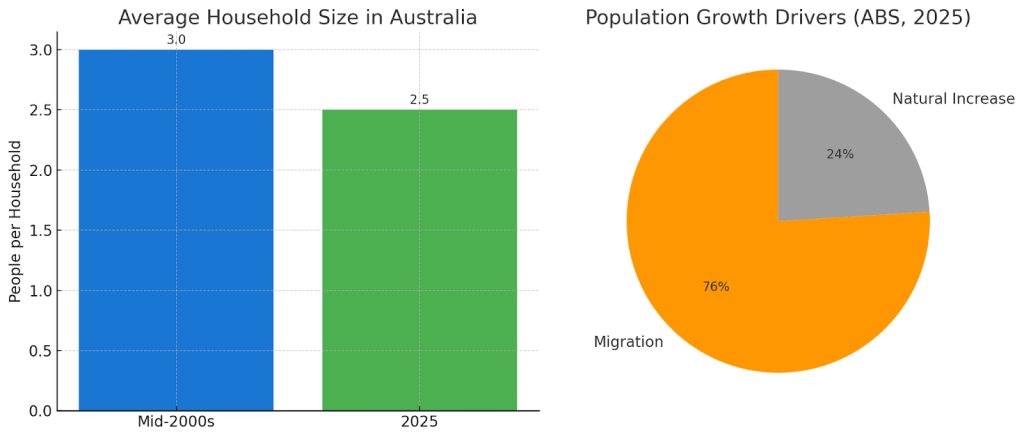
Population growth is now almost entirely driven by migration. Net overseas migration makes up about 76% of population growth (births are low), concentrating demand in capital cities. At the same time, Australian households are getting smaller. The average household has fallen from ~3 people to about 2.5abs.gov.au. For example, official [ABS data] (June 2025) reports an average of ~2.5. Smaller households mean many more dwellings are needed to house the same population.
Supply shortfall persists
Home building remains below what’s needed. Approvals and completions are running around 180–190 thousand homes per year, while demand is roughly 180k. This is well below the ~240k per year goal to fix the shortfall. As a result, AMP estimates an accumulated deficit of ~200,000 homes. Even with recent gains, completions remain under 240k, so the gap keeps growing.
Tight rental markets
Vacancy rates are at historic lows. In major cities, vacancies are under 2% (record lows), which drives rents up. Almost all capital cities now have vacancies around 1% or lower, highlighting how scarce rentals are. For investors, this means strong rental yields – but only in suburbs with really high demand.
Productivity is a bottleneck
Another hurdle is weak construction productivity. Over the last 30 years, homes built per hour of work have fallen about 53% while productivity elsewhere rose. In practical terms, more incentives or workers are yielding fewer homes. In short, the housing pipeline is being slowed by low productivity. Improving approvals processes, construction methods, and skilled labour is critical if Australia is to lift supply faster.
What this means for buyers and investors
- Chronic undersupply means prices are likely to keep rising. Buying earlier can help you secure a lower price before demand rises further.
- Smaller homes are popular now because household sizes are shrinking to an average of 2.5 people. More homes are needed, townhouses and units, in inner suburbs and older neighbourhoods.
- Rental markets are performing well, with vacancy rates below 2%. This keeps rental return solid. However, this success depends on choosing areas where tenant demand stays consistent.
- Waiting to buy could cost you, even with grants or tax cuts in place. Supply will take years to match current demand, so delaying might mean paying higher prices later.
- High migration drives more people to capital cities, keeping demand strong in those areas. This pressure will boost long-term growth in these markets.
- Specialists such as D’MANSHA study these trends on your behalf. We identify popular neighbourhoods, find hidden opportunities, and rely on data to secure the best results for you.
So, what are you waiting for? D’MANSHA is all available to help you in making a wiser decision for a better tomorrow. For more insights, call us at 0406 11 22 44 or book a free strategy call to discuss your needs.